
Objects made where the winter is long
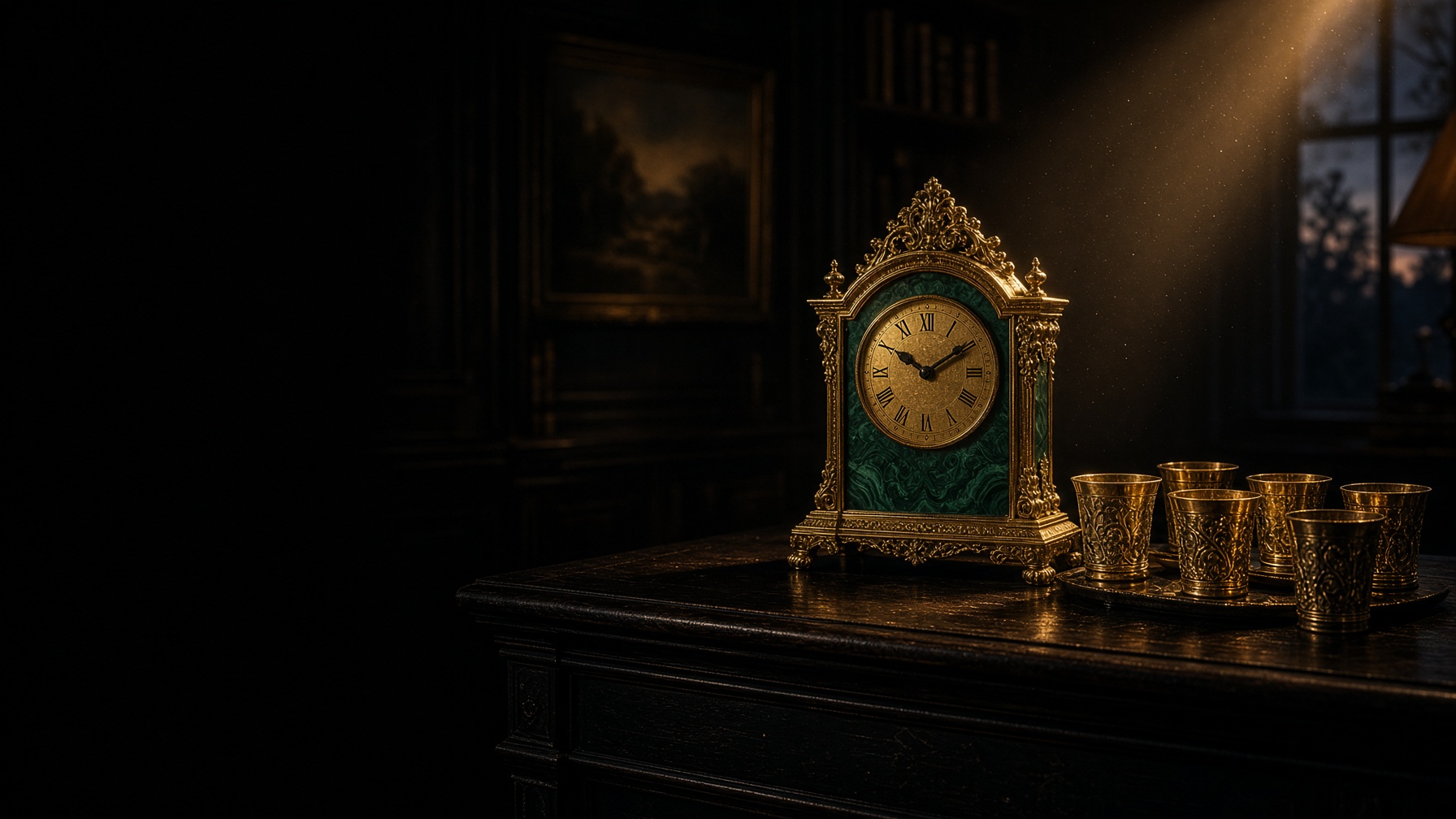
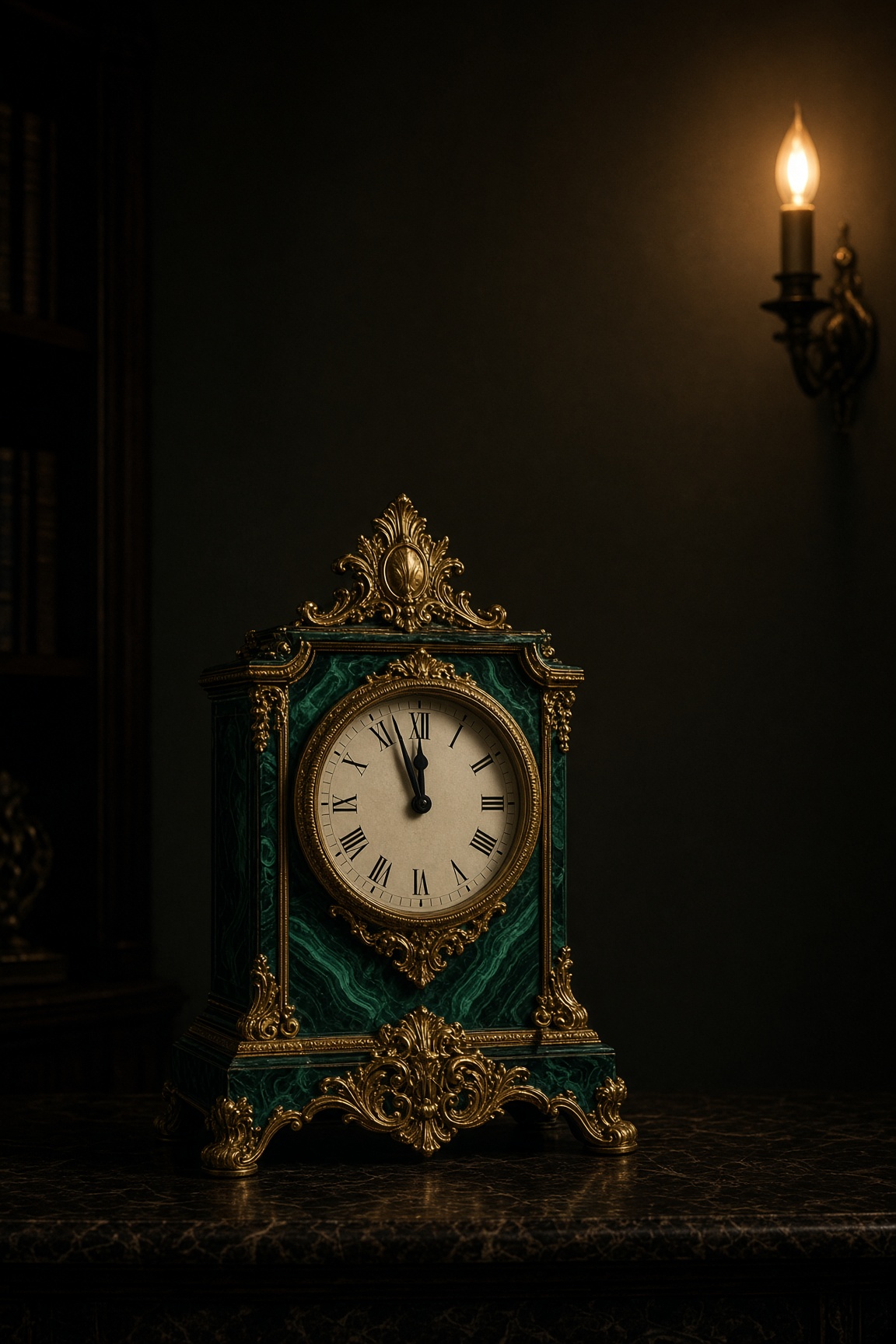
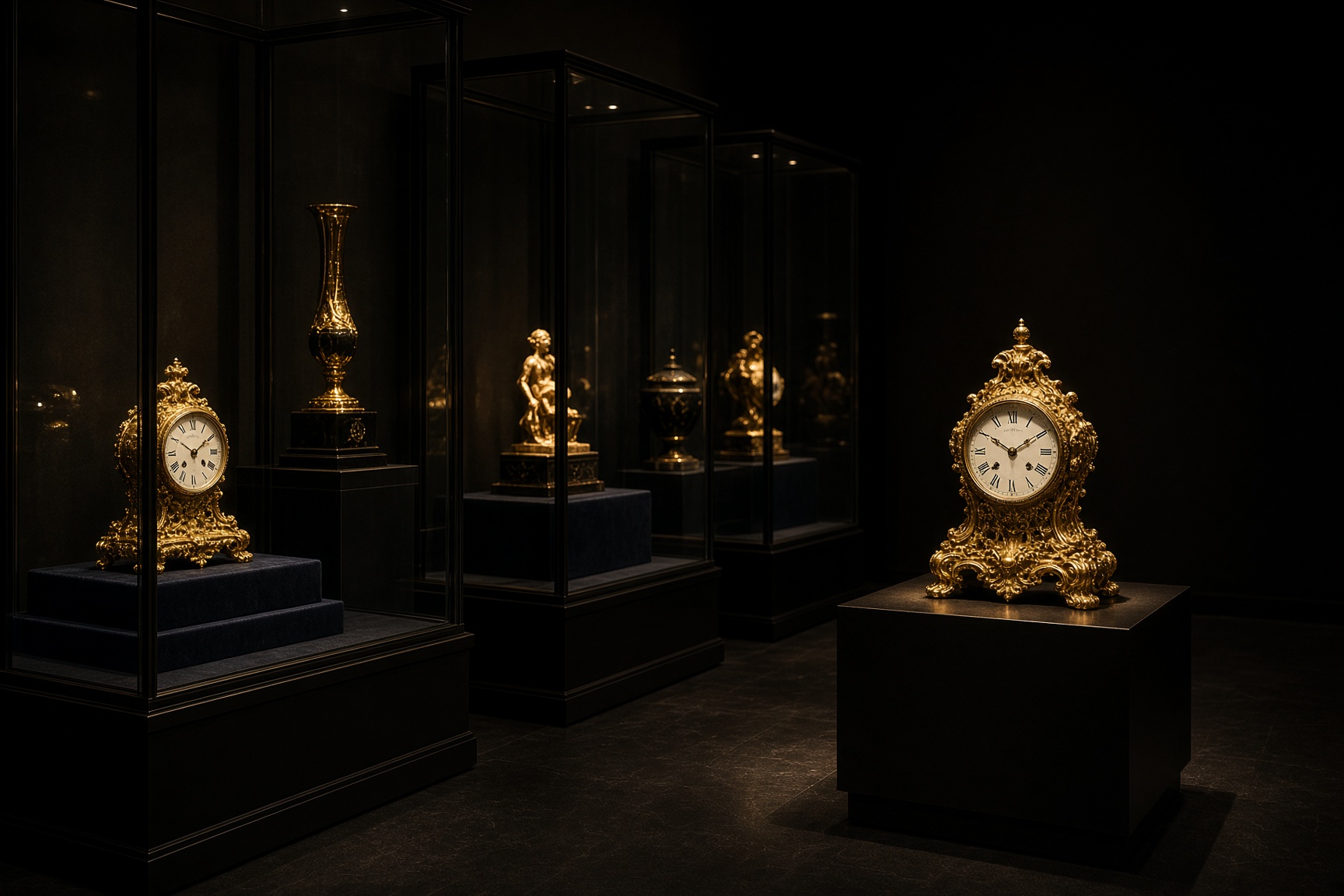
Gilt bronze, Ural malachite, Baltic amber and cut crystal — chased, set and engraved by hand in a Vologda workshop that has kept the same bench since 1871. Made in small numbers, numbered and signed.
The signature objects
Each is made in a run of no more than forty a year. Tap any object for materials, dimensions and care.
Nineteen objects, four cases
No cart — everything is placed by the conciergeFour hands, four seasons
Wax first, bronze after
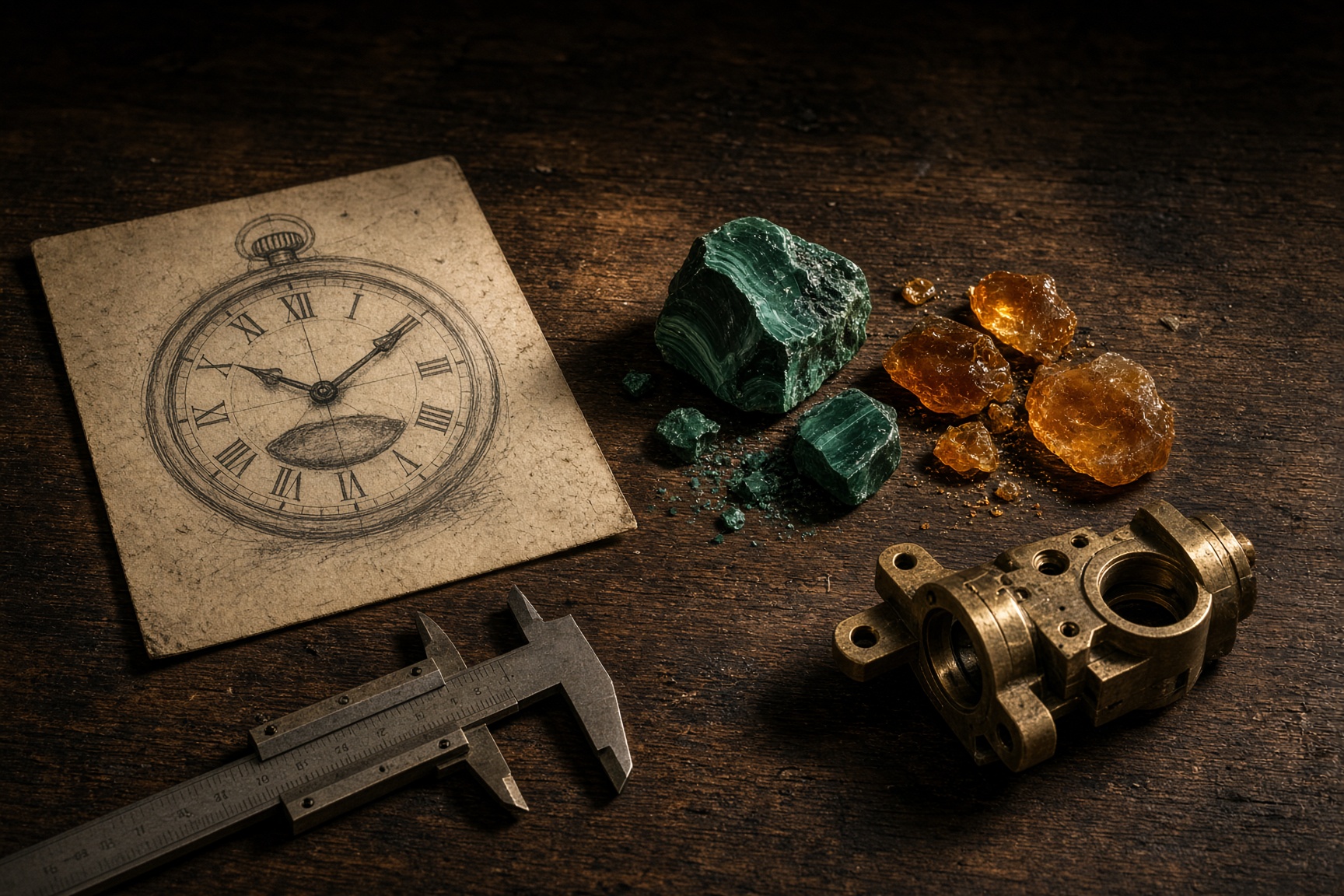
Every figure begins as a wax model built up by hand over a wire armature — horses, riders, the firebird's tail. Nothing is scanned or printed. The wax is corrected until it reads correctly from three metres away, then it is cast.
Chased with the same punches
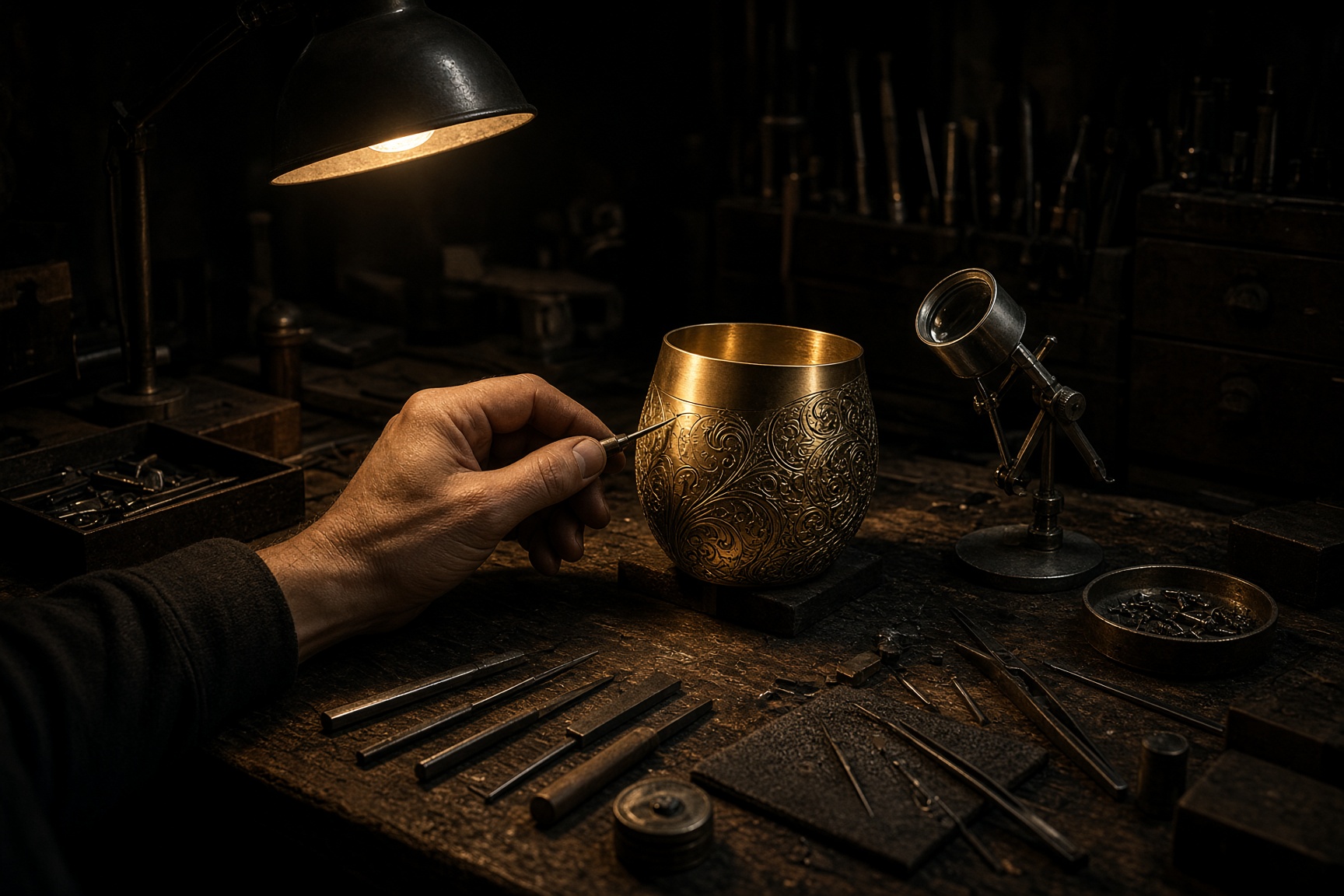
Acanthus, bead and scroll are raised into the bronze with steel punches, many of them cut by the workshop in the 1890s and still in the rack. It is the chasing, not the plating, that makes the gold look deep.
Malachite is cut, never bent
Malachite and nephrite arrive as rough blocks and are sawn into veneers a few millimetres thick, then book-matched so the banding runs on across a joint. A cathedral clock is about nine months of this.
Gilded, assembled, signed, dated
Parts are gilded, then hand-burnished where the light will catch and left matte where it should not. Assembled, checked against the drawing, and stamped with the maker's mark, the year and the number in the run.
Commission a piecefor a room you know
Send a subject, a monogram, or a photograph of the room it will stand in. We model it in wax first, in the stone and metal you choose. Most commissions take between four and nine months.
Write to the concierge with the room and the intent.
We send a drawing, a stone and metal board, and a price.
Half at the start; the wax is modelled. Photographs each month.
Gilded, signed, dated, crated and delivered by hand.
One bench, five generations
Ivan Beresov opens a bronze-casting and stone-setting workshop two streets from the Vologda river port.
The workshop becomes an artel. Output is standardised; the family patterns are kept in a drawer.
The drawer is opened. Nadezhda Beresova reclaims the bench and the old patterns go back into production.
A stone-cutting room is added. Clocks become the house's most requested work.
Four makers, nineteen objects, a showroom by appointment — and the same bench, worn to a hollow.
Stone with papers
Malachite, nephrite and jasper come from named Ural quarries, with origin documents.
Numbered and signed
Every object carries the maker's mark, the year, and its number in the run.
Crated for the journey
Built crates, insured freight, customs papers prepared. Delivered to the room, not the kerb.
Repaired for life
Bring anything back — re-gilded, re-set or re-fitted at the bench that made it.
What people write afterwards
The clock changed the room more than the renovation did. It is the only warm thing in a very grey flat.
They sent a photograph every month of the casket being built. By the time it arrived I knew it.
We specified four mantel clocks for a hotel lobby. Nine months, no compromises, no excuses.
By appointment,above the workshop
One person answers everything
Availability, shipping to your country, a commission, or a photograph of an object in daylight — write and Anna replies the same working day, in English or Russian.
Questions we are asked
Do you ship outside Russia?
Yes — crated and insured, with customs paperwork prepared by us. Clock movements are regulated and certified before the crate is closed.
Why are prices given on request for some objects?
Malachite, amber and jasper vary block to block. Where the stone decides the price, we quote once we have chosen the block with you.
How long does a commission take?
Four to nine months — longer where malachite has to be cut and book-matched. We hold the slot once the first half is paid.
How should gilt bronze be cared for?
Dust with a soft brush, never a polish or solvent — the burnished and matte areas are meant to differ. Return it any time and we will re-gild at cost.